Showing posts with label D. Assignment 3: 3MW. Show all posts
Showing posts with label D. Assignment 3: 3MW. Show all posts
Monday, 2 July 2018

Friday, 29 June 2018
Introduction To The News
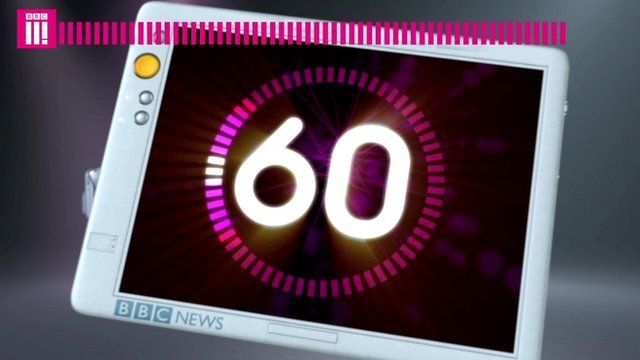
I watched a BBC broadcast which was around 60 seconds long and in this they fit in a lot of stories. The specific one I watched was with a woman presenting and they covered 5 different stories ranging from the "Adam Johnson Scandal" to laser pens becoming a deadly weapon. The stories were placed in what seemed to be order of importance or what would generate the most attention. The presenter started speaking about Adam Johnson and his sexual assault case, which at the time was huge news. This specific TV show, or mini-show starts with a big introduction and consists of a clock with the number 60 inside it, to show that it will only last 60 seconds.
 News ordering is the order that the stories are shown in. Just as I explained above, it will either be because of breaking news, importance and how much it will affect the person watching the news. Breaking news is slightly different though as it literally breaks the news order, this could be due to a major event which takes priority over anything else. Prospect lists are things that the editors come up with to possibly put on the broadcast. The editor can then cross out and re-arrange the news order as to how he/she sees the best fit. A slow news day is when more trivial stories are covered because there is not enough interesting topics to cover, they would look towards the prospect list and work things out over the broadcast. News values are how you know how much light you should give towards a story, and the guidelines are used by newspapers and TV broadcasts alike. Galtung and Ruge came up with this idea through common interests throughout the news and made a 'scoring system' with a list of values to see how big of an impact the story had on the general public.
 In the broadcast, it mostly covered the Adam Johnson case which was a huge scandal at that time. The reason for this being and having a huge feature is due to his prominence, or "eliteness". Being a celebrity footballer and being accused of sexual assault is degrading, but it's also incredible news for the news stations. They can get a lot of viewers very easily and just like G and R said, this news story would come under the Personality section, which generates a lot of attention. Adam is represented as a bad person, which is completely understandable due to the nature of what he's being accused for. The news made it seem and feel like he was guilty, and I really did not like Adam for what he did. The media directly influenced me to think that Adam is a sick man. This news story was at the front, which obviously showed how important it is.
 A photo bias is specifcally choosing a bad photo to put the celebrity in question in bad light. A good example is of Trumpo boarding a plane and his hair flying everywhere. There was a lot of shots taken that time, but this one was specifcally chosen because we all know Trump hates his hair. Bias through names and titles is quite eays to explain, its when the editor will usually get something bad from you and then use it against you. Finally, bias through language is a good one to speak about as it can be used to promote a bad message. For example instead of terrorist, it could be scum, scumbag or even more.
The reason I believe this type of broadcasting is quite popular is because it gives you a quick fix of news if you're in a rush or just need an update. It's particularly handy having something like this you can just "flick on" during the advert breaks of a TV show without having to watch an entire news broadcast.
This particular broadcast had the 26 yr old Sam Naz as the presenter. She's quite popular in and around the BBC and is not shy of being on TV, when she began in 2003 as a News Reader. These people quite literally present the news to you over the TV, radio or any other form of multimedia. They are usually at a desk, but can be at the scene / near the scene of the news report. You're expected to be a great speaker and be extremely confident with the camera. You should try to be enthusiastic and in a sense "promote" what you are saying. You should always try to be typically unbiased towards your news report, as this could reflect back on the station you present on.
News ordering is the order that the stories are shown in. Just as I explained above, it will either be because of breaking news, importance and how much it will affect the person watching the news. Breaking news is slightly different though as it literally breaks the news order, this could be due to a major event which takes priority over anything else. Prospect lists are things that the editors come up with to possibly put on the broadcast. The editor can then cross out and re-arrange the news order as to how he/she sees the best fit. A slow news day is when more trivial stories are covered because there is not enough interesting topics to cover, they would look towards the prospect list and work things out over the broadcast. News values are how you know how much light you should give towards a story, and the guidelines are used by newspapers and TV broadcasts alike. Galtung and Ruge came up with this idea through common interests throughout the news and made a 'scoring system' with a list of values to see how big of an impact the story had on the general public.
The values they had listed are:
Negativity: Stories which don't give happiness, stuff like "Child murdered by dad" or "Plane crashes into WTC".
Close to Home: More local news things, for example if it was about Lowestoft it could be "Lowestoft Fishing Brought Back To Life!".
Recency: A fight to be the first to report breaking news, newspapers are a culprit for this.
Currency: A story which runs for a long time but is still popular, such as the Madeline McAnne case.
Continuity: Interesting reports which leave the audience wanting more and more, keep wanting them to tune in. Things like long haul police chases, or a missing person.
Uniqueness: Quirky things which grab your eye: "Man eats computer a day for 30 days" would be one.
Simple: Easy to understand news headlines which get straight to the point: "Tree burnt down in forest"
Personality: Usually these news reports are about someone, most commonly someone in the public eye. For example "Justin Bieber has a new girlfriend!"
Expect: If a news story was exactly what you expect it to be, or what everyone is saying it will be.
Elite: A story which covers someone with power, or a huge nation. For example a terrorist attack in USA would overshadow a terror attack in Mexico.
Exclusive: If a station gets an exclusive to interview someone or something, maybe about an event or recent happening it will generate a lot of attention.
Size: How big the story really is. A cat getting stuck up a tree is less important than a train crash killing 50 people.
 In the broadcast, it mostly covered the Adam Johnson case which was a huge scandal at that time. The reason for this being and having a huge feature is due to his prominence, or "eliteness". Being a celebrity footballer and being accused of sexual assault is degrading, but it's also incredible news for the news stations. They can get a lot of viewers very easily and just like G and R said, this news story would come under the Personality section, which generates a lot of attention. Adam is represented as a bad person, which is completely understandable due to the nature of what he's being accused for. The news made it seem and feel like he was guilty, and I really did not like Adam for what he did. The media directly influenced me to think that Adam is a sick man. This news story was at the front, which obviously showed how important it is.
Bias is a huge problem within the media industry because you are always trying to remain unbiased towards everyones opinions. Some editors specifically remove stories as it doesn't fit their agenda and they are bias towards another view. A great example of this is when President Trump was running for president. While Fox News only ever showed the good, CNN only ever showed the bad giving this huge clash between media and it influenced pretty much everyone. Bias placement is when you simply put something at the front so more people would see it, pushing your agenda more than anything else. Biased headlines also exist, and they would go along the lines of making sure it sounds much more interesting than it actually is.
A photo bias is specifcally choosing a bad photo to put the celebrity in question in bad light. A good example is of Trumpo boarding a plane and his hair flying everywhere. There was a lot of shots taken that time, but this one was specifcally chosen because we all know Trump hates his hair. Bias through names and titles is quite eays to explain, its when the editor will usually get something bad from you and then use it against you. Finally, bias through language is a good one to speak about as it can be used to promote a bad message. For example instead of terrorist, it could be scum, scumbag or even more.Thursday, 28 June 2018
3MW - Primary Research
Survey Responses (18 responses)
How long have you been playing Maplestory?
0-1 years: 4 people
1-3 years: 5 people
3-6 years: 7 people
6+ years: 2 people
How many hours a week do you play Maplestory?
1-3 hours: 2 people
3-6 hours: 3 people
6-10 hours: 10 people
10-15 hours: 2 person
15 hours+: 1 person
Would you say the game has opened up more social opportunities for you?
Yes: 12 people
No: 4 people
Not sure: 2 people
Do you find it hard meeting people in real life, and is it easier online?
Yes, it's hard, and it's easier online: 13 people
No, it's easy, but easy online too.: 1 person
Yes, it's hard, and hard online: 2 people
No, it's hard, and hard online too: 2 people
Not sure: 0 people
Would you say the game is more than a game, and a social experience too?
I agree with that statement: 9 people
I disagree with that statement: 4 people
It's more of a social experience than a game: 2 people
Not sure: 3 people
Do you feel the game has good social elements?
Yes: 17 people
No: 1 person
Not sure: 0 people
For someone new to the game, what would you say a good social aspect is? *Optional*
"The party system"
"The buddy system is really great!"
"The chat system is really easy to navigate and has a lot to offer"
"Guilds are a great way to meet new people"
"The guilds"
"Party chat"
"Party quests bring people together"
"I like guilds"
"The guild systems"
"Guilds"
"Guilding system"
"I miss the family system, but guilds"
How long have you been playing Maplestory?
0-1 years: 4 people
1-3 years: 5 people
3-6 years: 7 people
6+ years: 2 people
How many hours a week do you play Maplestory?
1-3 hours: 2 people
3-6 hours: 3 people
6-10 hours: 10 people
10-15 hours: 2 person
15 hours+: 1 person
Would you say the game has opened up more social opportunities for you?
Yes: 12 people
No: 4 people
Not sure: 2 people
Do you find it hard meeting people in real life, and is it easier online?
Yes, it's hard, and it's easier online: 13 people
No, it's easy, but easy online too.: 1 person
Yes, it's hard, and hard online: 2 people
No, it's hard, and hard online too: 2 people
Not sure: 0 people
Would you say the game is more than a game, and a social experience too?
I agree with that statement: 9 people
I disagree with that statement: 4 people
It's more of a social experience than a game: 2 people
Not sure: 3 people
Do you feel the game has good social elements?
Yes: 17 people
No: 1 person
Not sure: 0 people
For someone new to the game, what would you say a good social aspect is? *Optional*
"The party system"
"The buddy system is really great!"
"The chat system is really easy to navigate and has a lot to offer"
"Guilds are a great way to meet new people"
"The guilds"
"Party chat"
"Party quests bring people together"
"I like guilds"
"The guild systems"
"Guilds"
"Guilding system"
"I miss the family system, but guilds"
3MW - Proposal
 |
| Maplestory Logo 2007 - Present
In my 3MW, I plan to explore MapleStory, an online MMORPG created by Nexon in April 2013. I'll be discussing the basic overview of the game and a clear emphasis on the social aspect to the game, and how it brings people together, even over the internet. I'll talk about the classes in game, and how each class can bring certain people together (for good, or bad reasons). I will also mention the guild system, alongside the buddy system, and how these two help bring people together.
I am going to be aiming this documentary towards players and non-players of the game, between the ages of 16-22. I feel like the documentary would intriguge people both male and female as the game has an equal divide between both. I feel like people between the ages of 10-15 and 22-30 are my secondary audience as they are not as involved within the game as the other age ranges. I did a bit of research to figure out this demographic. The actual aim of this documentary, or 3MW, is to show people that this game is more than just a game and how it can clearly give you friends over the internet who you can talk to and hang out with. This can end up in actual fulfilling friendships, and people meeting, to even marriages. Due to personal experiences, I can speak about this very openly and explain how I've come to love this game for more than just killing monsters or trying to get to the highest level fast, but to use it as an escape from reality. As I plan on interviewing other people of the game, I will first have to brief them on what I plan to achieve with my documentary and hopefully make it quite clear. As these people live far away, I will be using Discord to speak to them. All of the people live overseas and have given me permission to use their voice, as long as I change the pitch of it. I will not need to be present within the interviews, but I will be doing a voiceover throughout the documentary. I have compiled a list of questions that I plan to ask the three candidates which are:
I won't need to supply too much equipment and props are not necessary at all. I am going to be recording my screen with a piece of software called Nvidia Shadowplay, which allows you to record your desktop screen in real time. I will be using this to get pieces of footage from the game, and videos of other people around me. I want people to see actual footage to see how social the game actually is, and that there is more than meets the eye.
|
Documentary Mini Task
What is a documentary?
A documentary is something that should promote or show information and cannot be staged, or have some sort of bias (to a certain extent). A lot of people watch documentaries for information and usually class the information from them as real, which is why they cannot be staged. A documentary is something real and not something from a film, and it will usually show/feature the film-maker within it.
Expository Documentary
 An expository documentary is something that will direct it towards the audience to show a point with evidence and explain it. This is the most common type of documentary and will usually be featured from a voice-over. For example, Blue Planet is a great type of documentary for this as it featured Sir David Attenborough with a voice-over with a lot of footage in the background. The use of his voice is to highlight key features and things which are going on, on the screen, because without him it would be a very bland and boring video, but he brings it straight to life. These type of documentaries take a long time to plan and film, and it includes a lot of travelling, but in the end it should always give the audience more information and involvement and will usually produce an excellent watch.
Reflexive Documentary
 These types of documentary are commonly called an experimental documentary and they make the audience feel more aware of problems within the documentary its-self. Louis Theroux is a great start to talking about these types of documentaries as he is involved within the filming of the documentary and overall narration, but he tries to stay somewhat impartial to the action involved. A great example is when he went to visit the West Boro Baptist Church. He did get involved within their activities, but he did try to stay quite far back when things get rough. Experimental film makers are all around the world and are usually known as being quite indie and niche.
Observational Documentary
 These types of documentary are more cinematic than anything and the film-maker is usually not involved with the filming at all, but he will still have a presence in the film. An example of an observational documentary could come under Big Brother. While more a reality TV show than anything else, it did used to broadcast celebrities 24 hours a day, while we just watch in. The film-maker does not have a direct influence on the celebrities involved and just gives us a 24/7 documentary for us to watch.
Interactive Documentary
 These documentaries show the film-maker having a huge presence within the film as he or she will drive the entire film. Just like last time, a great example of this is Louis Theroux and most particularly, When Louis Met Ann Widdecombe. While he is a huge presence, and so is she, Louis is fighting to get the truth out of this controversial woman, and will ask things to shock the audience, or maybe even trip up Ann. These documentaries usually have a smaller budget and only a small crew due to the amount of travelling involved within it, and because the film-maker is in the shot, he is usually always on camera. These documentaries usually show peoples true colours and engage the audience much more clearly.
Performative Documentary
 The final documentary to talk about is Performative. These documentaries usually always show the film maker and the film maker is usually directly involved within the action. They usually show someone trying to show their view on the topic they are making a documentary about. For example, Fahrenheit 9/11 is a great example of this. It shows Michael Moore giving his direct opinion on the controversy between the Invasion of Iraq in 2003, saying how the media influenced it and gave an entirely bias opinion to it, and the presidency of George Bush. Because it being so close the 9/11 attacks, and being a play on words of the novel Fahrenheit 451, it generated a huge amount of controversy between it.
In my opinion, the best style of documentary is Interactive. It involves the user and film-maker and really engages the audience and gets them involved within the action too. You can see what feels like real reactions and real interactions between the film-maker as they are getting involved in potentially dangerous activities to show you what life there is really like.
Thursday, 17 May 2018

Subscribe to:
Posts (Atom)
-
https://www.depict.org/2017/family-dinner/?category_request=2017 Family Dinner was one of the first films I watched from the DepicT! w...

